
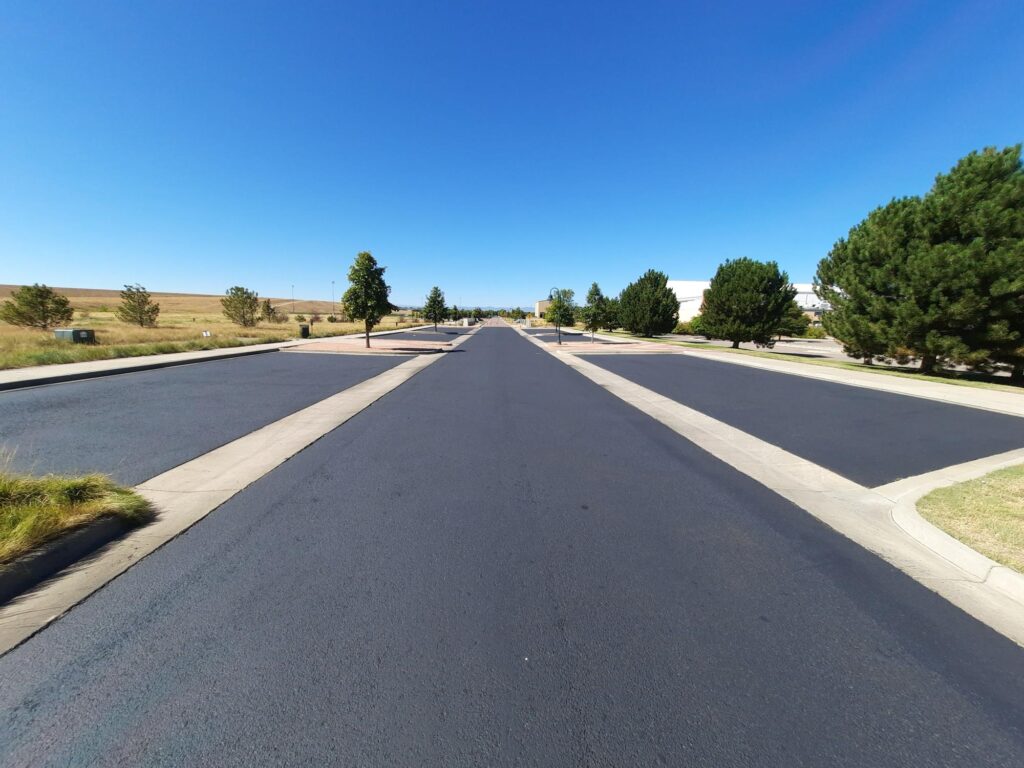
Commercial sealcoating helps protect asphalt from sunlight, moisture, traffic, and everyday exposure while creating a darker, cleaner appearance. The key is understanding what it can do, when the surface is ready, and which repairs should happen first.
What Does Commercial Sealcoating Do?
As asphalt ages, weather and regular use gradually affect it. The surface may fade from black to gray or become more vulnerable to wear. Sealcoating adds a protective layer that reduces direct exposure to the elements.
That layer does not make old pavement new again. Instead, commercial sealcoating is preventative maintenance intended to support the asphalt already in place. When used at the appropriate point in the pavement’s life, it can help slow surface deterioration and maintain a more polished appearance.
For businesses, HOAs, residential communities, and private roads, appearance also matters. A dark, even surface can make the property look cleaner. However, appearance should never replace an evaluation of pavement condition.
Is the Pavement Ready for Commercial Sealcoating?
Not every asphalt surface is an immediate candidate. Before commercial sealcoating, pavement should be evaluated for cracks, potholes, uneven areas, drainage concerns, and visible deterioration. The recommendation depends on its age, traffic, use, and condition.
Commercial sealcoating is better suited to structurally serviceable pavement. It should not hide serious failures. If the base has moved or large sections are breaking apart, a surface coating will not correct the underlying problem.
Property managers should watch for warning signs such as:
- Open or widening cracks
- Potholes and broken pavement
- Low areas where water collects
- Loose aggregate or extensive surface deterioration
- Failing patches and uneven transitions
Finding these concerns does not automatically rule out commercial sealcoating. It means the damaged areas may need attention before the protective coating is applied.
An evaluation can prevent money from being spent on the wrong treatment. When commercial sealcoating fits the pavement, the project can focus on preservation. When it does not, repair recommendations can address the source of deterioration first.
Repairs Should Come Before the Coating
Surface preparation matters. Dirt, debris, and existing damage can interfere with an even application. More importantly, a coating cannot replace crack sealing or localized asphalt repair.
Crack sealing can limit water and debris entering suitable cracks. Infrared repair may address potholes, utility cuts, uneven pavement, or worn seams. Completing appropriate repairs first gives commercial sealcoating a more stable surface to protect.
This order matters because sealcoat is a surface treatment. Commercial sealcoating can reduce exposure and improve appearance, but it cannot rebuild weakened pavement layers. A contractor should explain whether the asphalt needs crack sealing, repair, or another service before coating.
Planning Around a Commercial Property
Commercial sealcoating affects how people enter, park, drive, and make deliveries. Owners should discuss access before work begins. Phasing may keep one area available while another is treated.
Weather and surface conditions affect scheduling. Commercial sealcoating requires suitable application and curing conditions. The contractor should review the forecast and explain when traffic can return. Clear communication helps everyone prepare.
Before approving a proposal, ask:
- What pavement preparation is included?
- Are repairs recommended before commercial sealcoating?
- How will entrances and traffic routes be managed?
- What conditions could change the schedule?
- How long must treated areas remain closed?
- What future maintenance should be expected?
Specific answers clarify the proposed work and how the coating fits the property’s long-term pavement plan.
Building a Longer-Term Maintenance Plan
Commercial sealcoating is one part of pavement care. Owners should continue inspecting the surface, keeping drainage clear, and addressing new cracks or localized damage. Needs change with traffic, weather, and pavement age.
At Coatings, Inc., we have served Denver and the Front Range since 1970. We evaluate asphalt and provide commercial sealcoating, crack sealing, and infrared repair based on each property’s condition and use. We recommend practical work while minimizing interruptions for businesses and communities.
If your asphalt looks faded or exposed, our team can determine whether commercial sealcoating is appropriate or whether repairs should come first. A condition-based plan can improve appearance, support long-term performance, and help property owners make more informed maintenance decisions.