
Asphalt repair is easiest to manage when property owners act before a small problem becomes a large one. Cracks, potholes, low areas, and rough patches can affect drainage, vehicle movement, and pedestrian safety. Understanding the damage and the available solutions helps owners make informed maintenance decisions.
Why Asphalt Surfaces Begin to Fail
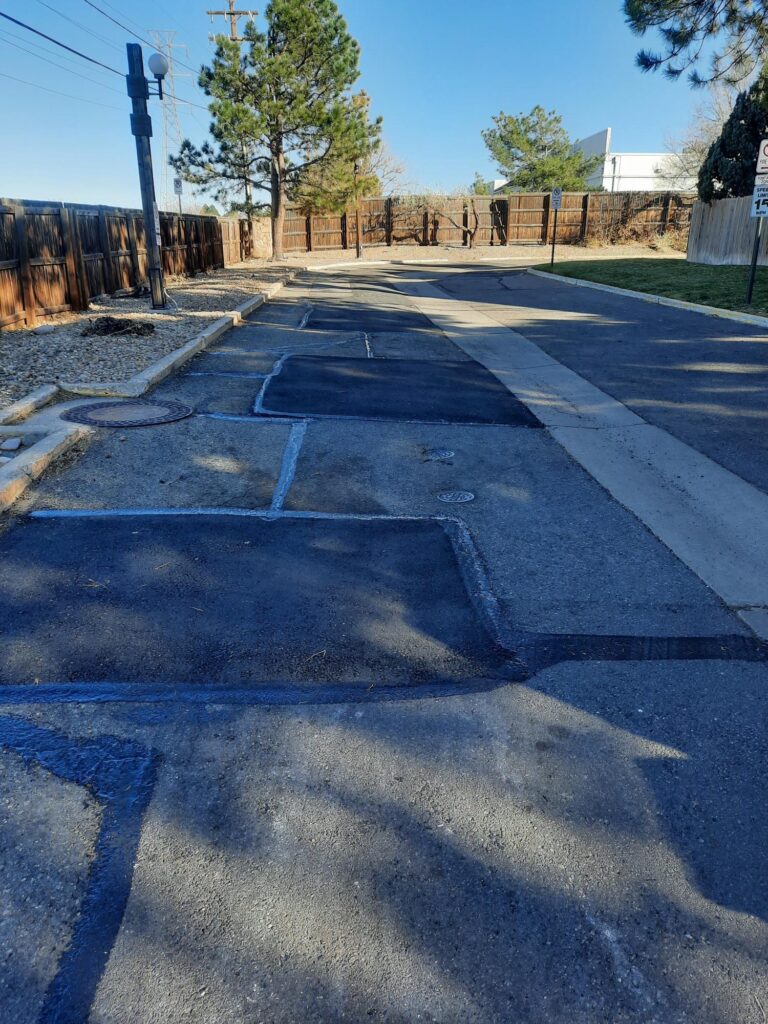
Asphalt is durable, but traffic, sunlight, water, and temperature changes gradually wear it down. The binder holding the pavement together can weaken, leaving a faded, brittle, or rough surface.
Colorado weather creates another challenge. Water can enter a crack, freeze, expand, and pressure the surrounding pavement. Repeated freeze-thaw cycles allow small openings to grow. Timely asphalt repair limits moisture below the surface.
Heavy vehicles also stress parking lots and private roads. Weak base material, poor drainage, utility work, or an older patch can cause isolated failure. Good asphalt repair addresses the cause, not only the visible symptom.
Signs That Pavement Needs Attention
Not every blemish requires the same response. However, property owners should schedule an evaluation when they notice:
- Cracks that are widening, multiplying, or collecting debris
- Potholes, depressions, uneven patches, or standing water
- Loose aggregate and sections that look rough or brittle
- Previous patches separating from the surrounding pavement
- Changes that create a rough walking or driving surface
Early asphalt repair can often remain focused on a limited area. Waiting may let water and traffic affect the base. Inspections are especially useful after winter.
Matching the Method to the Damage
Effective asphalt repair is not one standardized treatment. Its location, depth, cause, and surrounding pavement condition should guide the recommendation.
Crack sealing is a preventative option for cracks that have not become widespread failure. It limits water and debris entering the pavement. Although it cannot rebuild a failed base, it can slow deterioration when used at the right stage of an asphalt repair plan.
Infrared asphalt repair can address potholes, utility cuts, and uneven areas. It reheats existing pavement so it can be reworked and blended with new material. The method can create a smoother transition than a conventional patch with less disruption around an active property.
Some damage requires more extensive asphalt repair. Deep failure, interconnected cracking, or base movement cannot always be corrected at the surface. An inspection can distinguish a maintainable defect from a structural problem.
Repair and Preventative Maintenance Work Together
Completing asphalt repair is only part of protecting pavement. Cracks should be monitored, drainage kept clear, and new damage handled promptly. Seal coating may be recommended after necessary repairs. It protects a suitable surface from weather and everyday exposure while creating a darker, more uniform finish.
Seal coating is not asphalt repair and should not hide potholes or structural cracking. Correcting damaged areas first gives the coating a better surface and helps owners receive more value from it.
A plan should consider pavement age, traffic, condition, budget, and property operations. On a busy commercial lot or in a residential community, asphalt repair may need to be phased so entrances and traffic routes remain accessible.
Choosing the Right Time for Service
Scheduling asphalt repair early preserves more options. A small crack is easier to manage than a pothole, and a localized pothole is easier to address than a failing section. Owners should request an assessment before damage becomes severe.
The asphalt repair area must be properly prepared, and weather can affect scheduling and material performance. An asphalt repair contractor should explain the method, why it fits, how access will be managed, and what maintenance comes next.
Experienced Asphalt Care Across the Front Range
At Coatings, Inc., we have served Denver and the Front Range since 1970. Our asphalt repair options include professional crack sealing and infrared repair, along with seal coating for ongoing protection. We assess the pavement, recommend a practical approach, and work to minimize interruptions for businesses and communities.
If you see cracks, potholes, utility cuts, or uneven pavement, our team can determine whether targeted asphalt repair fits the surface. The right asphalt repair at the right time can improve everyday use and support a longer, more manageable pavement life