
Basketball court resurfacing can help restore a worn, faded, or uneven court before surface problems become harder to manage. Outdoor courts take abuse from foot traffic, weather, UV exposure, moisture, and everyday use. Over time, the surface can lose color, develop cracks, hold water, or feel less consistent during play. For schools, HOAs, parks, apartment communities, and private facilities, knowing when basketball court resurfacing is needed can help protect the court and improve the experience for players.
What Is Basketball Court Resurfacing?
It is the process of repairing and refreshing the top playing surface of a court. It is not always the same as full replacement. In many cases, the base of the court may still be usable, but the surface coating, texture, color, or line markings need attention.
A resurfacing project may include cleaning the court, repairing cracks, addressing low spots, applying new surface materials, adding color coating, and repainting lines. The goal is to create a cleaner, smoother, safer, and more consistent surface for regular play.
Signs Your Basketball Court May Need Resurfacing
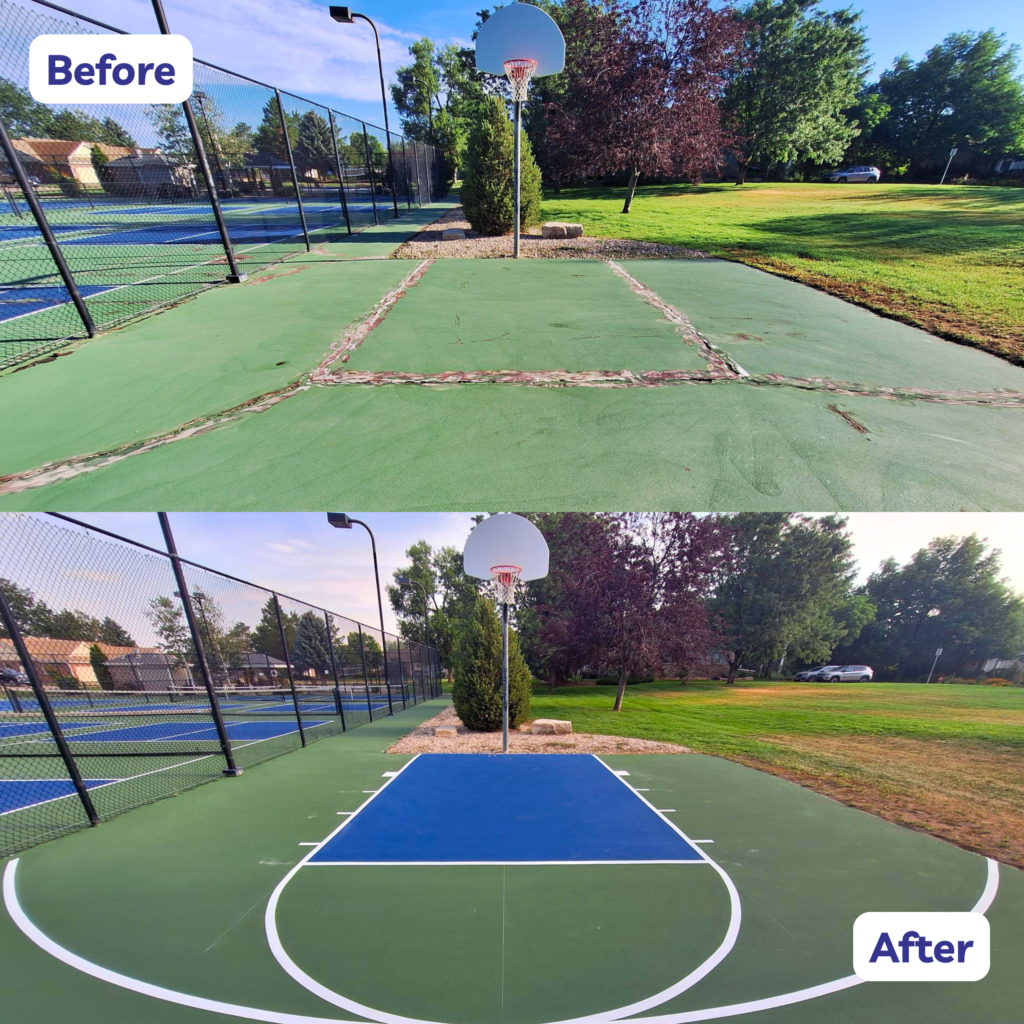
A court does not have to look completely worn out before it needs work. Small issues can grow if they are ignored, especially when moisture gets into cracks or worn areas.
Common signs include:
- Faded or dull court color
- Cracks spreading across the playing area
- Low spots where water collects
- Peeling, flaking, or worn surface coating
- Slick areas with reduced traction
- Rough texture that feels uncomfortable underfoot
- Lines that are difficult to see
- Uneven ball bounce or dead spots
These problems can affect more than appearance. A worn surface may be harder to play on, less visually clear, and less inviting for the people using the space. When several signs appear together, basketball court resurfacing may be the right next step.
Why Cracks and Low Spots Matter
Cracks and low spots are two important issues to watch. Cracks allow water to enter the surface, which can lead to movement and damage over time. In Colorado, freeze-thaw cycles can make this worse because trapped moisture can freeze, expand, and push the surface apart.
Low spots, sometimes called birdbaths, are areas where water remains after rain or snowmelt. Standing water can interrupt play, create slippery areas, and speed up surface wear. If puddles keep forming in the same places, basketball court resurfacing may need to include surface repair or leveling before new color coating is applied.
How Resurfacing Improves Playability
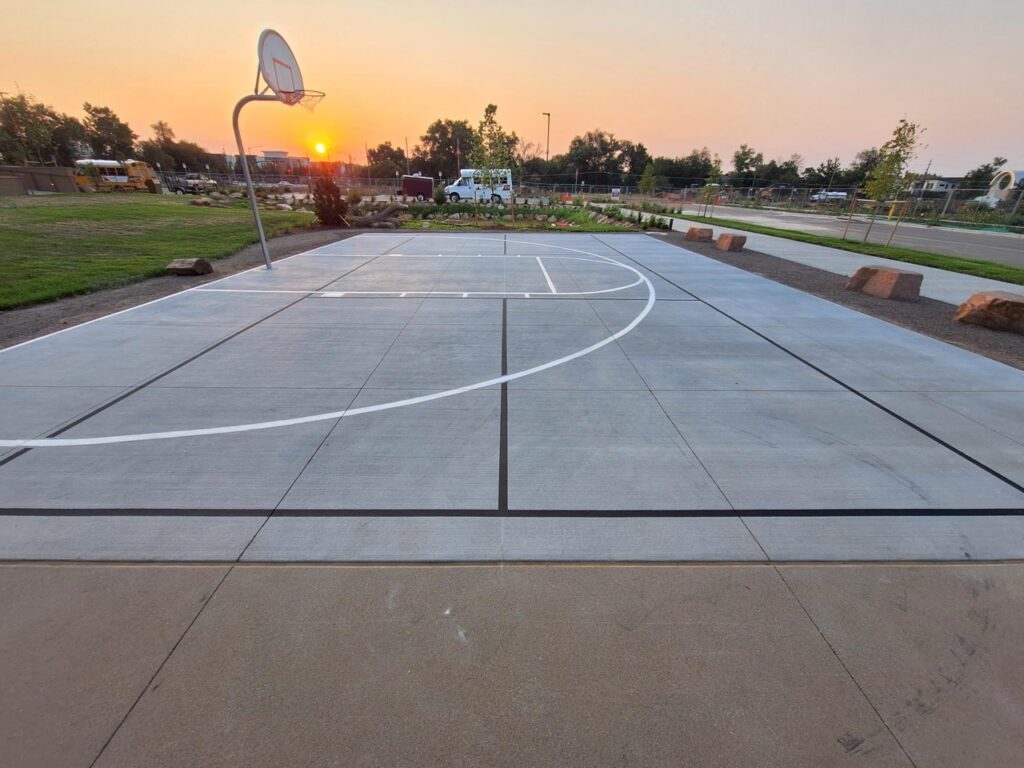
A resurfaced surface can make the space feel cleaner, brighter, and more functional. For players, surface consistency matters. Traction, ball bounce, and clear court lines all affect how the game feels.
Basketball court resurfacing may help improve:
- Foot traction during movement
- Ball response across the playing area
- Visibility with fresh color and striping
- Overall court appearance
- Long-term usability of the recreational space
For property owners, resurfacing can also support curb appeal and show that the facility is being maintained.
Resurfacing vs. Full Replacement
Resurfacing may be practical when the playing surface is worn, faded, lightly cracked, or uneven, but the base is still workable. Full replacement may be necessary if there are major structural problems, severe drainage issues, deep cracking, or widespread base movement.
That is why a professional evaluation is important. The right recommendation should be based on the condition, how it is used, and what problems are showing on the surface.
A Better Space for Players and Property Owners
Basketball court resurfacing is about more than making an old court look new again. It can help improve safety, appearance, playability, and long-term use. At Coatings, Inc., we provide court repair, resurfacing, color coating, restoration, and maintenance solutions for outdoor playing surfaces. If your court is faded, cracked, holding water, or no longer playing the way it should, a surface evaluation can help determine the best next step.