
With pickleball’s explosive growth across the country — participation in the sport has increased dramatically over recent years, and outdoor and community courts are catching up with demand— maintaining high‑quality surfaces is more important than ever. For facilities and property owners, pickleball court resurfacing is an essential part of ensuring safety, optimal playability, and long life for these popular recreational spaces.
At Coatings, Inc., we understand that surface wear and damage occur over time due to regular use, weather exposure, and aging materials. Investing in professional maintenance not only restores your court’s performance but also reinforces its durability for years of fun and competition.
Why Resurfacing Matters
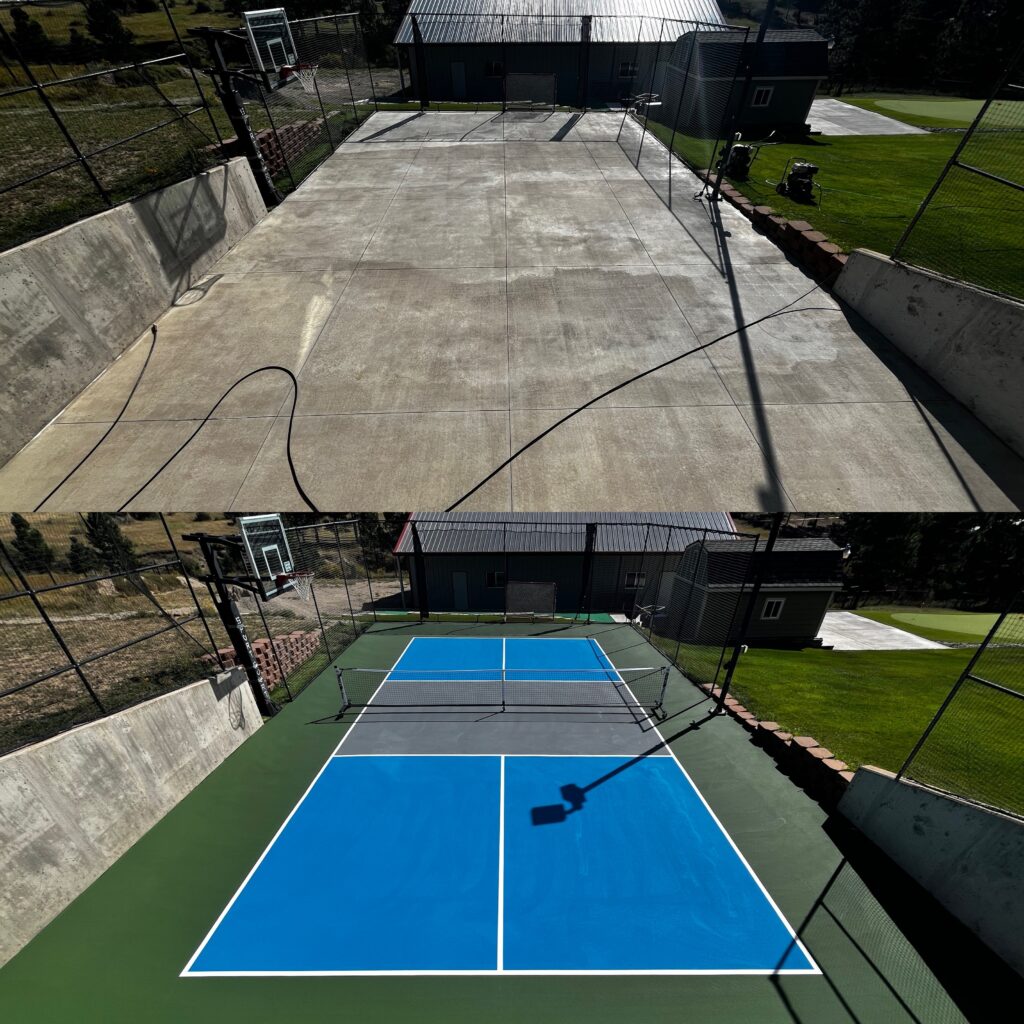
Outdoor courts are exposed to a wide range of stresses. Heavy foot traffic, shifting temperatures, UV rays, and moisture all contribute to surface deterioration. Over time, a court may develop small cracks, fading colors, uneven texture, or tripping hazards. These issues not only impact the quality of play but also create safety concerns for players.
According to surface maintenance guidelines, regular maintenance such as cleaning, patching, and resurfacing extends the life of a court and helps prevent minor flaws from becoming major problems. Resurfacing effectively renews the structure beneath the color and lines, smoothing out imperfections and refreshing the protective coatings that shield the surface from environmental wear.
For multi‑purpose facilities that accommodate both pickleball and tennis, this is a proactive way to manage varying levels of use and ensure all players enjoy a consistent experience.
Signs Your Court Needs Professional Attention
Knowing when to invest in pickleball court resurfacing helps owners stay ahead of serious issues. Some common signs that your court may benefit from professional resurfacing include:
- Cracks and Surface Wear: Small cracks and surface flaws may be harmless at first but can widen over time, leading to uneven ball bounce and increasing trip hazards. When these begin to spread, resurfacing is often the best solution.
- Faded or Dull Color: Intense sun exposure and frequent play cause pigments and surface coatings to lose vibrancy, which while partly cosmetic, also means the protective layer has worn thinner and the underlying material is more exposed.
- Drainage Issues or Water Pooling: Water that doesn’t drain properly can accelerate wear and compromise the surface base. Resurfacing can help restore proper texture and slope for improved drying and playability.
- Uneven Bounce or “Dead Spots”: A smooth, even surface ensures predictable play. If balls react inconsistently or play feels unsafe or frustrating, resurfacing can restore uniform texture and performance.
Resurfacing can address these problems before they become costly safety issues or lead to larger structural repairs.
What Professional Pickleball Court Resurfacing Includes
Professional pickleball court resurfacing is more than just a cosmetic update — it’s a carefully managed process that restores the entire playing surface. Typical steps include:
- Surface Preparation: Thorough cleaning and removal of debris, dirt, and any vegetation to ensure proper adhesion and a smooth base.
- Crack and Patch Repair: Repairing cracks, chips, and surface damage with specialized materials ensures that the resurfacing application is consistent and durable.
- Application of New Surface Layers: New layers of resurfacing material — often acrylic coatings — are applied evenly for optimal performance, traction, and heat resistance.
- Line Striping: Accurate, regulation‑compliant painting of boundary lines and court markings enhances play quality and player experience.
Professionals take into account local climate conditions, such as Denver’s freeze‑thaw cycles, which can affect curing and material performance.
Long‑Term Benefits of Resurfacing
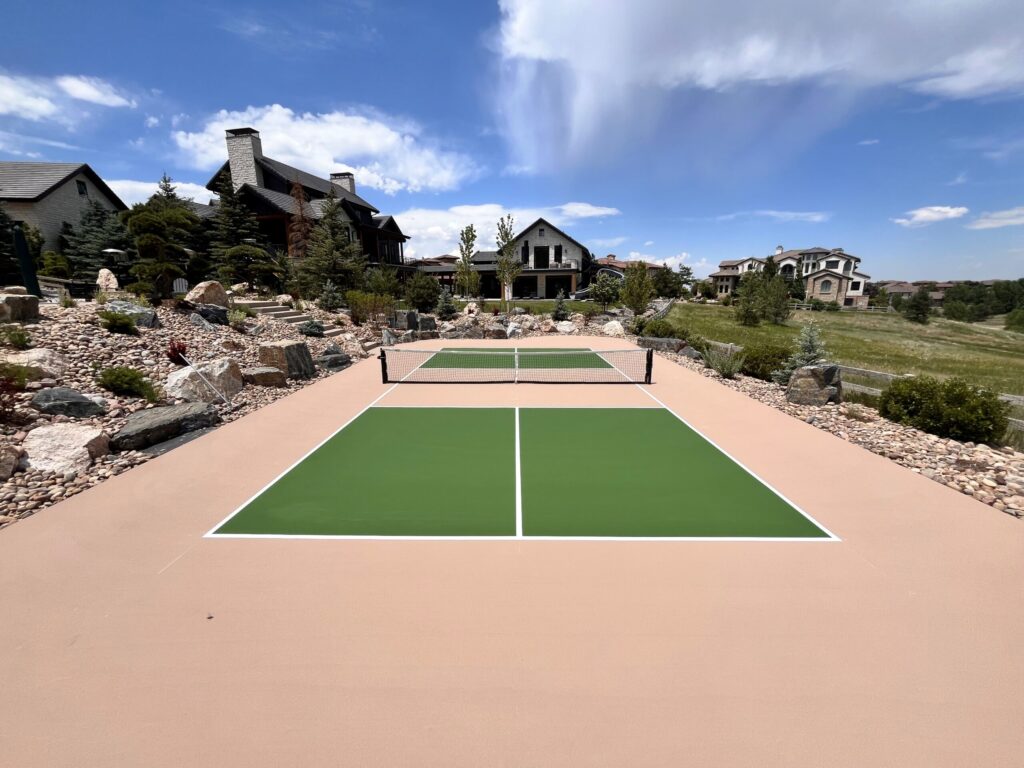
Investing in pickleball court resurfacing doesn’t just improve the immediate appearance of a court — it contributes lasting value for players and facility managers alike. A smooth, even surface reduces trip hazards and eliminates dead spots, creating a safer and more consistent play environment. It also restores traction, enhances ball response, and helps courts stand up better to daily wear, foot traffic, and harsh weather conditions.
Beyond playability and safety, resurfacing breathes new life into aging courts with vibrant, UV-resistant color coatings and sharp line striping. A freshly refinished surface can even reflect community colors or branding while increasing the overall appeal of the space. At Coatings, Inc., resurfacing is part of a long-term maintenance strategy that prioritizes quality, performance, and extended court life — whether you’re updating a single neighborhood court or maintaining a large recreational complex.
Why This Is a Smart Long-Term Investment
Understanding when and why to resurface helps you protect your investment and provide the best possible experience for players. Keep an eye on wear signs, weather impacts, and usage patterns. If you notice surface defects or diminishing performance, it may be time to consult with a professional. Coatings, Inc. offers tailored court services, including high‑quality resurfacing, repair, and ongoing maintenance to keep your tennis and pickleball courts performing at their best. Reach out to discuss how pickleball court resurfacing can benefit your facility and help you stay up to date with evolving player needs.